
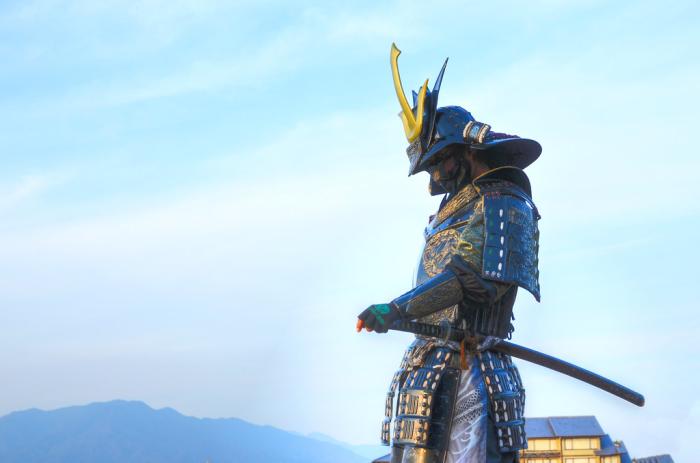
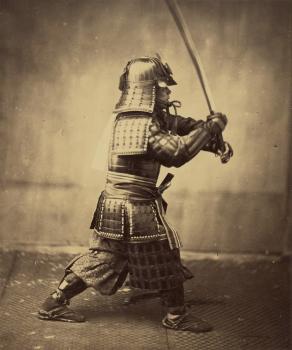
Samurai were Japanese warriors. They began as professional soldiers working for rich land owners, or serving as guards for nobles and the emperor. The word samurai translates to ‘those who served.’ During the Heian Period (AD 794-1185) the influence of the samurai started to grow. In 1192, the first Shogun came to power, and for the next 700 years, samurai clans fought to control Japan.
During this time, the status of samurais in society grew tremendously. They went from being soldiers to land-owning nobles. The most powerful of them were called daimyos.
Samurai were trained in armed and unarmed combat. They knew martial arts, and were trained in sword fighting, using a spear, horse riding, and archery. But they were also trained in spiritual and cultural arts as well. They were taught to read, write, and paint. Samurai were expected to live by a moral code called the Bushido, or ‘way of the warrior.’
They kept Japan safe from outside invaders for hundreds of years, even from the great Mongol leader and conqueror Kublai Khan. The age of the samurai last until 1868, when the emperor regained control of the country, and a national army was created in their place.
These articles are written by library staff using library resources such as books, eBooks, and databases. Information can vary from book to book and database to database. Tickle Your Brain is meant to be a jumping off point for starting conversations about new topics of learning. It is not to be used as an authoritative resource.
- They are known as bushi instead of samurai in Japanese.
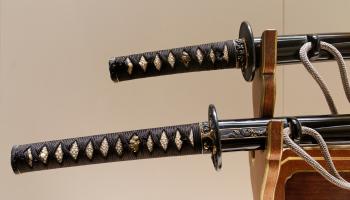
- Samurai used swords called katana.
- They believed that a samurai’s soul was in his sword.
- There were female samurai warriors. Samurai women were referred to as Onna-Bugeisha, and fought in combat alongside male samurai.
- Under special circumstances, foreigners could become samurai.
- Samurai: Japan's Noble Servant-Warriors, by B. A. Hoena
- Adventuregame Comics 3: Samurai vs. Ninja, by Jason Shiga
- Dragon of the Red Dawn, by Mary Pope Osborne